Trump Emerges as a South Asian Peacemaker: Encourages Pakistan-India Communication Despite Increasing Tensions and Applauds Pakistan’s Moderation
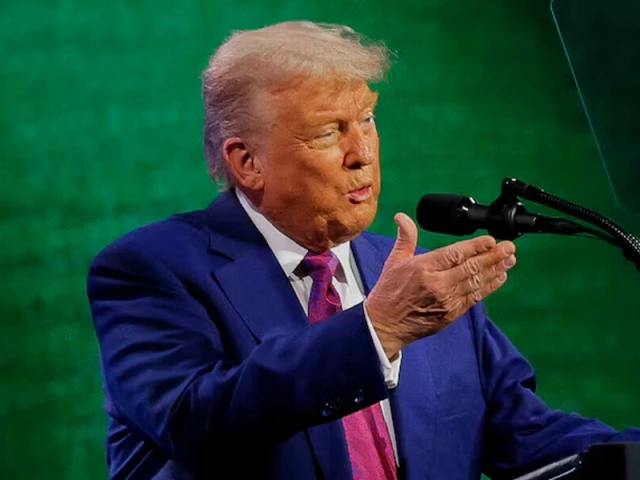
It wouldn’t be incorrect to state that US President Donald Trump has arrived as a peace ambassador in his second term, given his entirely altered and positive outlook during his four months in office. The world has been pleasantly surprised by the stopping of the Russia-Ukraine war, the lifting of sanctions on Syria, the beginning of bilateral talks with Iran in the hopes of resolving the forty-four-year-old differences and beginning a new era of friendly relations in return, and the cessation of the escalating war between the two nuclear-armed nations, India and Pakistan. But there are now doubts about America’s involvement in the ongoing Israeli attacks on Gaza.
President Trump is now promoting international trade rather than war, and he is sending the same message to India and Pakistan, telling them to invest their money on eradicating poverty rather than preparing for conflict. Pakistan has consistently advocated for peace. Pakistan remained patient and offered to look into the Pahalgam incident from all sides when Indian Prime Minister Narendra Modi, in a matter of seconds on April 22, 2025, justified the incident, began provocations, held Pakistan accountable, threatened it with dire consequences, and announced the suspension of the Indus Waters Treaty. However, intoxicated by its military might and believing that Pakistan was weak, India launched missiles at its civilian populations, destroying mosques and killing 26 people.
Pakistan retaliated by shooting down six of India’s well-known planes. India launched attacks on multiple Pakistani cities on May 8. The Pakistan Air Force destroyed the drones after they were attacked. The world was forced to commend the Pakistani falcons’ valor after the Indian missile strike on the Nur Khan Air Base on May 9th, which was the final straw for Pakistan’s patience.
The attack destroyed the Indian Air Force’s pride from dawn till 8 am. Realizing the fragility of the situation, President Trump put pressure on him to call for an early ceasefire and, through his mediation, to stop the conflict through negotiations before this string of Pakistani victories could continue.
In a TV interview following a four-day trip of Arab nations, President Trump outlined all the horrifying elements of the conflict between India and Pakistan and underlined the necessity for positive solutions for both parties rather than potential losses. The President Trump interview cited above demonstrates his positive and critical stance on Pakistan.
In addition to his desire that Pakistan will expand commerce with the United States, he believes that India and Pakistan should cooperate in this area. “The United States has not forgotten Pakistan,” he said candidly. The fact that Pakistan does not trade with Washington is unexpected given that it is a talented, intelligent, and hardworking country.
Prime Minister Shehbaz Sharif has consistently offered the Modi government the opportunity to discuss areas of bilateral importance rather than resolving all concerns jointly, which is significant in light of President Trump’s interview. However, he consistently viewed this as a vulnerability of Pakistan. Pakistan is encouraged by President Trump’s offer of mediation. Kashmir is one issue whose resolution will inevitably remove other issues, making it productive and sustainable.